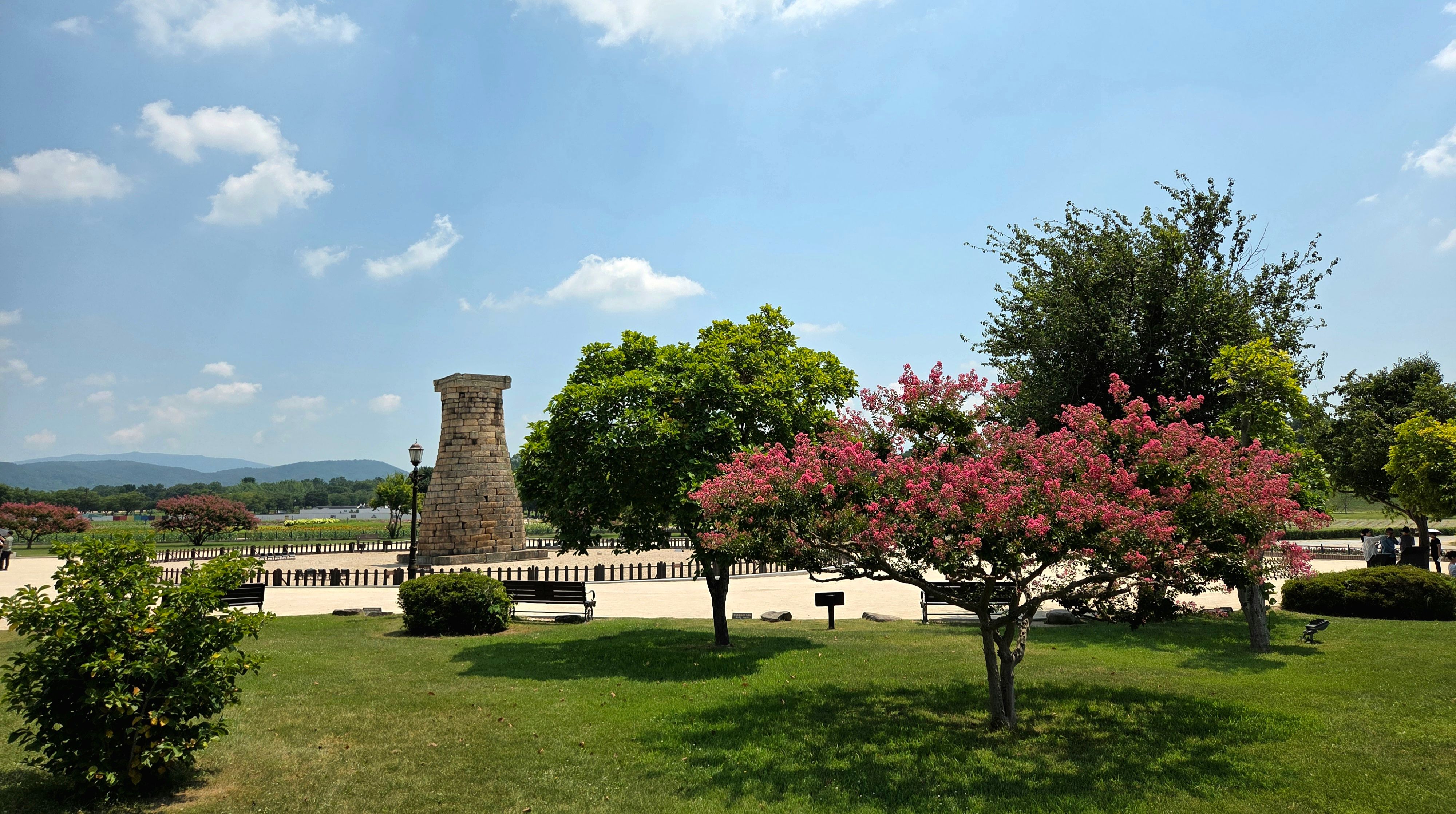
A Gyeongju itinerary works better when you divide the city into a central walking day and an optional temple day. For one day, concentrate on the tombs, Cheomseongdae and an evening view. With two days, stay overnight and give Bulguksa its own outing, or use the second day for the national museum and a slower historic-area walk. Trying to combine every famous place usually leaves the least time for the places you came to see.
The plan below is an editorial route suggestion for a first visit, not a personally timed journey. Adapt the order to your arrival, mobility, weather and onward ticket. It also explains where to stay, which costs to check and why an evening in Gyeongju can be more useful than one more distant attraction.
One day or two: decide what your arrival really allows
One full day is enough to explore a focused central area. It is a much tighter proposition if your train arrives near lunchtime and your return leaves before dark. Check the door-to-door journey from your accommodation to the departure station, the intercity journey, and the onward trip from Gyeongju's arrival point. The time on the train is only part of your sightseeing budget.
Two days with one overnight stay give you an evening without an immediate return journey and a morning before the next arrival crowd. However, a late arrival followed by an early departure still gives you little usable time. Write your actual arrival and departure hours next to the itinerary before booking a room. If you only have one afternoon, choose the central route rather than promising yourself both the historic core and the temple district.
| Time available | Suggested focus | Leave for another visit |
|---|---|---|
| One afternoon | Daereungwon area, a meal and Cheomseongdae | Bulguksa and Seokguram |
| One full day | Central historic area with one evening choice | A separate mountain or coast outing |
| Two useful days | Central day plus Bulguksa or museum-focused day | Combining every outlying district |
Where to stay for this route
For a first short trip centered on the tombs and evening walks, compare accommodation near the central historic area and the bus-terminal side of town. Check the exact address, not just a listing's claim to be in Gyeongju. A room that lets you walk back after dinner can be more convenient than a cheaper room requiring a late transfer. Map the luggage journey as well as the sightseeing journey.
A hanok-style stay can be appealing, but examine the room details: private bathroom, bed or floor bedding, steps, sound insulation, heating and luggage storage. These practical differences matter more than a beautiful exterior photograph when you arrive tired. Ask whether bags can be left before check-in and after checkout, especially if your second day involves an outing away from the center.
Bomun is a different accommodation choice rather than an extension of the same walking neighborhood. KTO describes the Bomun Tourist Complex as a lake-centered district east of downtown. Choose it if the hotel and lake time are part of the trip, then budget transport to the central sights. Our Bomun Lake guide helps decide whether that tradeoff suits you.
Arriving by train or bus: pin the correct station
Use the actual station and terminal printed on your ticket when searching a map. Gyeongju's rail and bus arrival points are not interchangeable, and an old blog's station name or photograph may refer to an earlier arrangement. Before buying, search the journey in the official KORAIL booking service or your bus operator's official booking channel. Check the date, departure point and arrival point together.
After finding an arrival that suits you, search the onward route to your hotel or first sight. Compare a bus with a taxi using the current map estimate, including the walk to the stop and the expected wait. Do not choose a train solely because its arrival looks early on paper if the next connection consumes the advantage. Keep enough time for a bathroom stop and finding your way out of an unfamiliar station.
For the return, work backward from the ticketed departure and allow a margin for traffic, waiting and collecting stored bags. If an evening view is your priority, staying overnight may be a calmer choice than planning around the last possible connection. You can compare the broader transport decisions in our KTX, SRT and intercity travel guide; search Gyeongju separately for your actual ticket.
Day 1 morning: Daereungwon, with time to understand the tombs
Start around Daereungwon if you have a full morning. The grounds and the visit inside Cheonmachong are different decisions. Gyeongju's official admission table currently lists free Daereungwon grounds, free Cheomseongdae access and an individual adult Cheonmachong ticket of ₩3,000. Check current notices and eligibility rather than assuming every visitor pays the same rate.
Choose whether you want to enter the tomb exhibition before joining a queue. If you do, leave time to read the interpretation rather than treating the interior as a quick photograph stop. Stay on the designated paths around the burial mounds. A mound that looks like a grassy hill is part of the heritage site, not a place to climb for a better angle.
Our Daereungwon and Cheonmachong guide explains the distinction in more detail. If you arrive late, shorten the route here and protect the sight you care most about. Skipping an optional queue is usually better than rushing all the remaining stops without understanding any of them.
Lunch and Hwangnidan-gil: leave space for an ordinary meal
Use the nearby streets for lunch and a short browse rather than planning a long list of named cafes. Pick a place by its current menu, queue and ability to serve your group. A restaurant's popularity does not guarantee that it fits your dietary needs or the time you have. If your first choice is busy, choose a workable alternative instead of letting the queue dictate the afternoon.
Hwangnidan-gil can also become the part of the day where you rest. Sit down, refill water where permitted and check your next walking leg. Our Hwangnidan-gil guide covers side lanes and food-stop choices. You do not need a second cafe immediately afterward simply because another itinerary includes one.
Day 1 afternoon: Cheomseongdae and one nearby extension
Continue toward Cheomseongdae and the surrounding historic landscape. Give yourself time to look at the observatory and read the interpretation before moving on. The garden appearance changes with season and maintenance, so the photograph above is a view of the place rather than a promise of the flowers you will find on your date. Keep to permitted paths and avoid entering planted areas for a picture.
Choose one extension according to your energy. A walk toward Gyochon and Woljeonggyo can suit an afternoon with comfortable weather; a seated break may be a better choice in heat or steady rain. Use our Cheomseongdae guide and Woljeonggyo walking guide to choose a manageable leg. Do not add both automatically if it makes the return to your accommodation awkward.
Day 1 evening: Donggung and Wolji or a shorter river walk
Donggung and Wolji is the paid evening option in this plan. The city's official visitor listing currently gives 09:00–22:00 hours, a 21:30 ticket cutoff and ₩3,000 individual adult admission. It describes illumination after sunset. Check the live notice for your date; the closing time is not a sensible target arrival time.
Eat before the visit if a late dinner would leave you searching when tired. Save the return route while you still have daylight and phone battery. If your return train leaves too early for a relaxed visit, choose a daytime stop or an overnight stay. Our Donggung and Wolji guide helps with the visit itself. A shorter walk near Woljeonggyo is an alternative, not a requirement to do both evening areas.
Day 2 option A: Bulguksa, with Seokguram only if the connection works
Give Bulguksa a separate morning if it is a priority. Search a bus or taxi from your exact base, then check the return before departure. KTO's current Bulguksa visitor listing gives free admission and 09:00–18:00 visiting hours, with exit by 19:00. Recheck the temple's notices and weather; older guidebooks may still show superseded entrance fees.
The value here is in observing the temple layout and stone architecture, not just reaching the entrance. Wear shoes that suit steps and uneven surfaces, follow photography notices and allow worshippers space. Our Bulguksa guide provides a fuller visitor route.
Seokguram is a further outing. Do not assume its map proximity means an easy walk or an immediate bus. Check the current connecting service, walking distance at the far end and return departure before deciding. If the connection is poor, enjoy Bulguksa and return for lunch instead. The Seokguram connection guide can help you plan, but it does not replace the day's live timetable.
Day 2 option B: the museum and a slower departure
The Gyeongju National Museum visitor page lists free general admission, with exceptions for ticketed special exhibitions, and its current general hours begin at 10:00. The English pages contain differing extended-hours notes, so plan a daytime visit and check the latest notice before relying on a late opening. Listed holiday closures include January 1, Seollal and Chuseok.
This option works well if you want more context for the tombs or if exposed walking is uncomfortable. Check gallery notices too: an open museum does not mean every room is available. Choose the exhibitions that interest you and leave enough time to collect bags. Do not force a temple transfer into the same departure morning just to complete a list.
Adjusting the route for less walking or difficult weather
If steps or long stretches on foot are difficult, choose fewer stops and investigate the actual entrances before booking accommodation. A short distance on a map does not show paving, gradients or the distance between a car drop-off and the visitor entrance. Ask your accommodation or the attraction about the access you need rather than assuming that a heritage site is fully accessible because the surrounding streets are level.
In heavy rain, make the museum the main visit if it is open and shorten outdoor sightseeing. In hot weather, move the longest exposed walk out of the middle of the day and allow a seated meal break. Neither adjustment requires filling every spare hour with another attraction. Save the hotel address and return route offline, and keep enough phone battery for the final transfer. If your group has different energy levels, agree on one easy meeting point before splitting up.
What to budget, and what to leave out
For an adult choosing Cheonmachong and Donggung and Wolji at the listed individual rates, the two admissions total ₩6,000. That is an admission example, not a whole-day budget. Add intercity transport, the arrival transfer, meals, accommodation and any taxis separately. Check the final ticket and room prices for your travel date rather than converting a past traveler's total into a promise.
Keep a transport reserve if your return depends on a bus connection, and compare the total taxi cost for your group before deciding it is too expensive or automatically worthwhile. If rain, heat or tiredness changes the day, remove an optional extension first. Yangdong Village, the coast and mountain hikes deserve their own routes; they are not spare-hour additions to this central itinerary. A good short visit leaves you time to notice the historic landscape and still reach your onward journey comfortably.
Sources and photograph
Visitor information and admission references were checked on 19 October 2026 using the linked city, museum and KTO pages. Recheck current notices, booking availability and transport for your date. Route order and pacing are planning suggestions, not a claim of personal travel experience.
Real Cheomseongdae photograph by Jueon Kim, Pexels source, under the Pexels license. The original photograph is preserved; the article uses a portrait display crop without generative editing.
Comments
Post a Comment