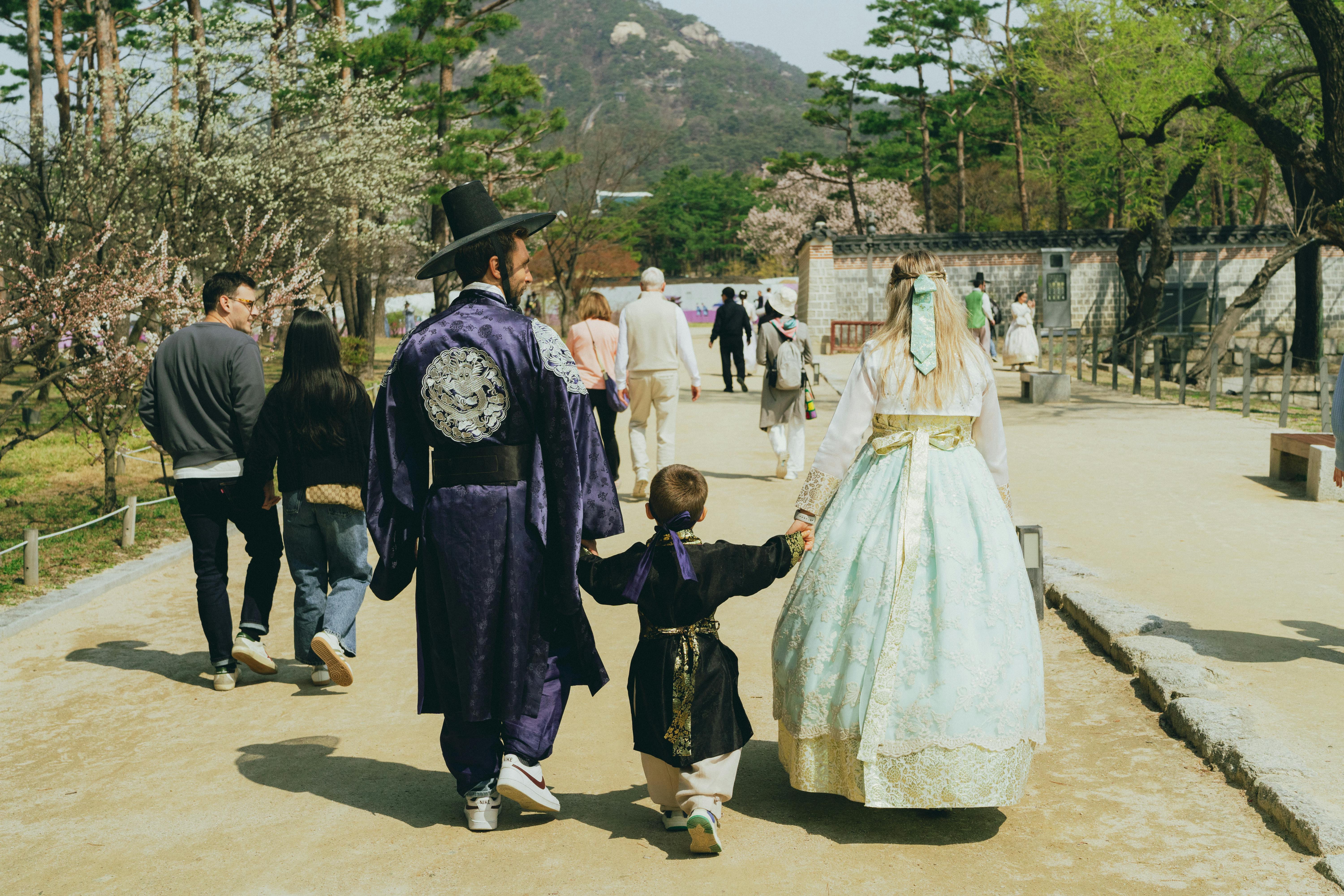
Traveling in Korea with kids is easier when the day is built around the child’s meals, rest and ability to move, rather than an adult sightseeing list. With a baby or toddler, choose a convenient base, one main outing and a nearby fallback. With older children, give them a real choice between activities and leave room to explore it. Seoul can supply plenty to do without changing hotels every other night.
This guide connects the practical decisions: airport arrival, accommodation, strollers, museum reservations, food and the daily budget. The sample days are editorial planning suggestions, not accounts of a personally tested family itinerary. They are deliberately flexible; a nap or a change of weather should not unravel the whole trip.
Start with the kind of day your child can enjoy
Before choosing attractions, write down three ordinary things: when your child usually eats, where they can realistically sleep during the day, and how long they tolerate being carried or sitting in a stroller. Those answers help more than a list of ten child-friendly places. A museum with a fixed afternoon session may be an awkward choice for a child who needs an afternoon nap.
For a baby, a successful outing might be an easy walk and lunch close to the hotel. A toddler may enjoy a short hands-on activity followed by space to move. A school-age child may prefer choosing a particular exhibition, craft or historical question. Siblings do not always need the same pace: agree in advance which activity is shared and when one adult can take a younger child for a rest.
Decide what you will drop first. Keeping an optional stop genuinely optional is more useful than booking three attractions and hoping the child will sleep between them. For a broader route, start with our 7-, 10- and 14-day Korea itineraries, then reduce hotel changes and activities to fit your family.
Choose the hotel by the final walk, not the district name
A hotel can be close to a station on a map and still involve an inconvenient crossing, stairs or a long route from the elevator. Before reserving, save the hotel’s exact entrance and look at the journey from the station exit you expect to use. Ask the property directly about steps between the street, lobby and room; a lift inside the building does not answer the street-access question.
Confirm the room occupancy for every adult and child, the actual bed arrangement and whether a cot is available for your dates. “Family room” is a room name, not a promise of a separate sleeping area. If an early bedtime matters, check whether an adult can sit somewhere without turning on the room’s main light. Laundry, a usable refrigerator and somewhere to buy breakfast may be more valuable than an impressive lobby.
In Seoul, compare bases against your actual outings rather than declaring one neighborhood best for all families. If most plans are north of the river, a hotel chosen for a distant southern attraction may add unnecessary journeys. Use our Seoul accommodation-area comparison to work backward from the places you want to visit.
Make the arrival day small
After an international flight, the first goal is getting everyone fed, changed and to the accommodation. Check your arrival terminal and the property’s check-in time. If the room will not be ready, ask about luggage storage and identify one comfortable nearby place to wait. Avoid a nonrefundable timed attraction immediately after arrival.
Incheon Airport’s official family-facilities page lists complimentary stroller borrowing at information desks, nursing rooms with changing facilities, and children’s play areas. Check the map for your terminal and whether the facility is before or after security. Airport equipment is useful during the airport visit; arrange your own stroller plan for the rest of the trip and ask staff about return arrangements.
Compare the complete airport-to-hotel journey: transfers, baggage, the final walk and the number of adults available to help. A train can be convenient for one hotel and awkward for another. For a prebooked vehicle, specify children’s ages and ask the provider to confirm suitable restraint availability and vehicle capacity before paying. Do not assume a standard taxi booking includes a child seat. Our Incheon Airport transfer guide explains how to compare the main options.
With a stroller, plan the entrance and the transfer
A stroller is useful only if it suits the route and you can handle it alongside luggage. Consider its folded size, how you will carry it when necessary, and whether you will also use a carrier. There is no single answer for every family. A child who naps in a stroller creates a different plan from a child who refuses it after ten minutes.
Seoul publishes station accessibility facilities, including elevators. Use that as a starting point, then check the exact station layout and current service notices. Elevator access at a station does not mean every street exit or every transfer follows the same convenient route. Give yourself time to find the correct entrance instead of choosing the nearest staircase.
For a first subway outing, choose a simple journey and allow a generous margin. Keep bags from blocking the stroller controls, stay clear of platform edges and follow station staff instructions. If the route proves too tiring, change the destination or return early. The aim is not to prove that the original plan was possible. Read our Seoul subway guide before the first journey, especially if tickets and transfers are unfamiliar.
Two children’s museums with different booking rules
“Children’s museum” does not identify one place. Two Seoul options have different locations and admission systems, so check the name before booking. Do not use one museum’s instructions for the other.
Children’s Museum at the National Museum of Korea, Yongsan
The official visitor guide lists free admission with a reservation. The reservation page provides the current sessions, opening of reservations, party-size rules and cancellation requirements. Book the actual children’s session; admission to the wider museum is not a substitute for that reservation.
Build the journey around arriving comfortably before the session. Decide on a meal and a place to rest separately, rather than assuming the play area provides everything for a half-day stay. Check current closure notices before setting off, and cancel if your plans change so the place can become available to another family.
Seoul Children’s Museum, beside Children’s Grand Park
Seoul Children’s Museum’s admission page lists a regular individual charge of KRW 4,000 for adults and children in the charged age category, with free admission for children under 36 months subject to documentation. Check the exact age boundary and acceptable evidence for your child before relying on free entry.
The museum FAQ describes both online reservations and a limited first-come on-site allocation. That is not a guarantee of a walk-in place. Check availability before the journey, particularly when a museum visit is your main indoor plan. Treat a nearby park walk as an option if the weather and your child’s energy allow it, rather than another compulsory attraction.
Three flexible Seoul day shapes
These are ways to organize a day, not timed circuits. Pick one that fits your accommodation and reservation, then check the actual routes. Avoid crossing the city just to complete the second half.
- A museum day: travel to a reserved children’s session, have an unhurried meal, and return for rest. An optional short outdoor walk belongs after you know how everyone feels, not as a condition of enjoying the ticket.
- A central-Seoul day: choose one palace-area or neighborhood stop, with a nearby lunch and an early return. Check surface conditions and entry arrangements before bringing a stroller. A short look at a place can be enough; you do not need to add a long shopping street afterward.
- A recovery day: eat near the hotel, visit a nearby open space or an age-appropriate indoor activity, and catch up on laundry. This creates room for the next day instead of turning every morning into a departure deadline.
For additional choices, the Korea Tourism Organization’s family-itinerary feature offers ideas for different generations. Use it to choose one suitable outing, rather than copying a regional driving circuit into a single day with a toddler. Our neighborhood-based Seoul itinerary can help keep the journeys together.
Food, changing and rest: identify the next practical stop
Look at the menu before everyone becomes hungry. Choose a place where the seating arrangement and ordering format work for your child, and ask about a high chair if you need one. A rice dish or soup is not automatically mild or suitable for an allergy: check the actual ingredients and whether sauce can be separated. Do not assume a dish that looks familiar has the same recipe as at home.
It helps to have a small, familiar food option for delays while still following airline, import and food-storage requirements. For infant feeding, use your usual preparation instructions and confirm what equipment the accommodation actually provides. A room kettle, refrigerator or shared microwave should not be assumed from a photograph of a different room type.
Before a long outing, identify where the next changing facility and rest stop are likely to be. Ask the venue whether the facility is in the public area or requires admission. A large building can still require a substantial detour to reach it. For dietary restrictions, our food-allergy planning guide gives a separate framework for questions and preparation.
Calculate the family cost, not just the child’s ticket
Free child admission can still leave adult tickets, transport, a paid locker and lunch. Write down the total for the actual group. As an example using the museum’s published regular rate, two charged adults plus one charged child would be KRW 12,000 for that admission alone. A younger child’s eligibility, a special exhibition or a changed rate can alter the total; verify the current booking screen.
Keep a separate line for the occasional easier journey. Replacing a difficult transfer with a suitable prearranged vehicle may matter more to your family than adding one more paid attraction. Conversely, a quieter local day can free part of the budget for a larger outing later. Our Korea travel budget guide separates hotel nights, daily spending and one-off costs.
When to add another city
Add a second base when the stay is long enough to make the move worthwhile and there is something there the family actually wants to do. Count packing, checkout, station access, the intercity ride and the next check-in as part of the moving day. A short train journey on a timetable can still consume most of a toddler’s comfortable outing time.
For a short first visit, staying in Seoul can be a complete holiday. For a longer visit, compare a few nights in one additional city with several day trips from the same hotel. Before booking intercity tickets, check the operator’s current child-fare and seat rules for each child; a discounted or free travel category does not necessarily provide a separate seat. Avoid buying on assumptions borrowed from another country.
Sources, photograph and review notes
Official airport, Seoul accessibility and museum pages were checked on October 20, 2026. Prices, reservations, closures and facilities can change; linked operator notices take priority. Route shapes, hotel questions and pacing suggestions are editorial planning advice, not guaranteed services or personal visit reports.
Photograph: Theodore Nguyen on Pexels, used under the Pexels License. It is a real Seoul family-outing photograph, not an image of the author’s family, a particular museum visit or an endorsement of this site. The original photo is preserved; the page uses a portrait display crop.
Comments
Post a Comment